Introduction: The Problem With Most Painkiller Prescriptions in India
Here is a clinical scenario that plays out thousands of times every day in orthopaedic clinics, rheumatology wards, and general practice consultations across India. A patient with arthritic knee pain or a chronic lower back condition needs a non-steroidal anti-inflammatory drug (NSAID) to manage their pain. The NSAID works — it reduces pain and stiffness and allows the patient to function. But within days or weeks, the same patient returns complaining of burning in the stomach, acidity, or nausea. The gastric lining, stripped of the prostaglandin protection that NSAIDs suppress as a side effect of their mechanism, is now irritated. In some patients — particularly elderly patients, those with a history of ulcers, and those on long-term NSAID therapy — this progresses to gastric erosion, ulceration, or even gastrointestinal bleeding.
The clinical response to this problem used to be: prescribe the painkiller and then deal with the stomach symptoms separately, adding an antacid or a PPI as a secondary prescription. But this creates the compliance problem of managing two separate tablet regimens, the inconvenience of separate timing requirements, and the risk that a patient in pain will take the NSAID and skip the gastroprotectant.
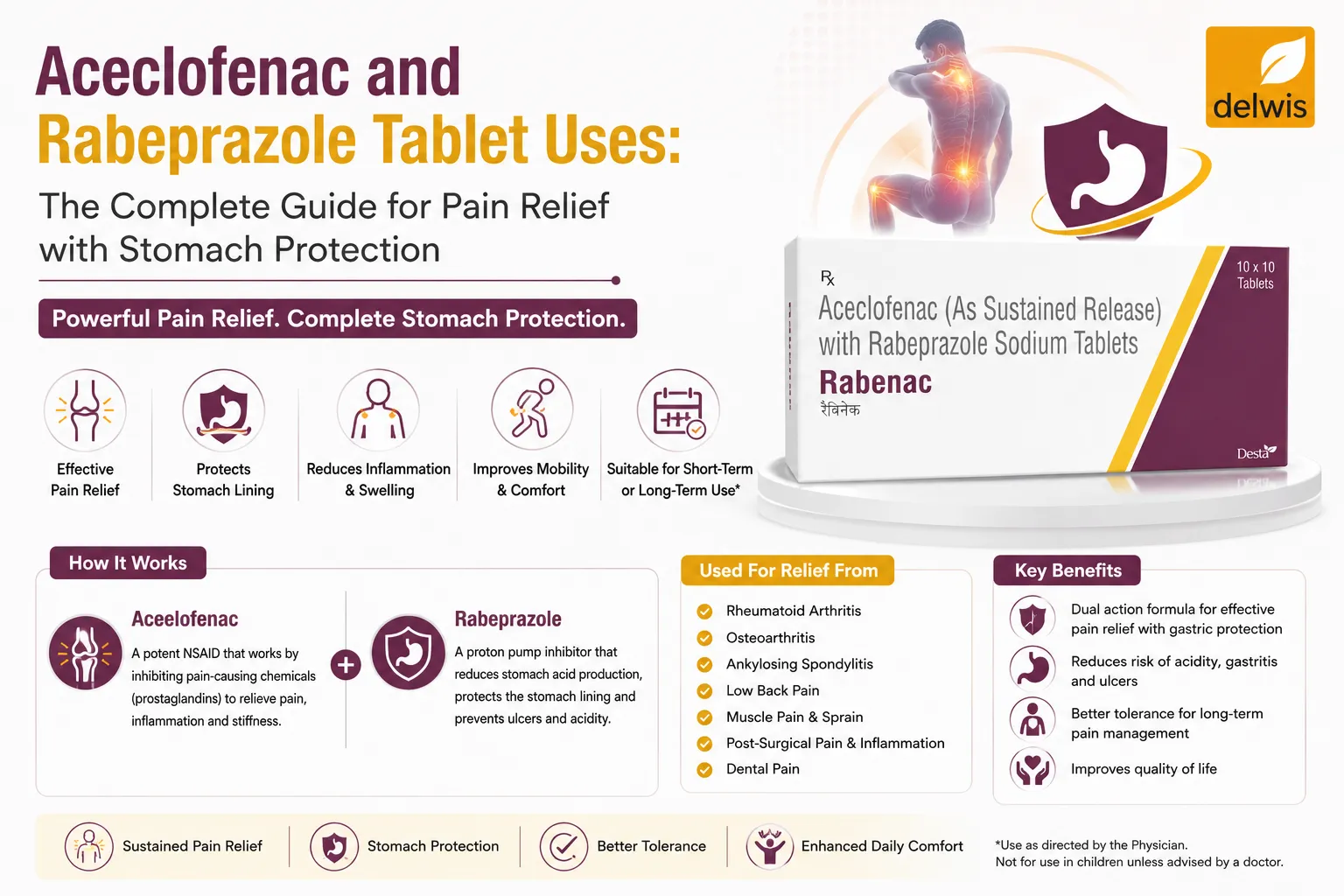
The aceclofenac and rabeprazole fixed-dose combination tablet was developed to solve this problem in a single, convenient dosage form — bringing together a more selective, better-tolerated NSAID and a fast-acting, reliable PPI into one tablet that addresses pain while simultaneously protecting the gastric lining from the very first dose.
This guide explains the complete uses, mechanism, dosage, side effects, and clinical rationale for the aceclofenac rabeprazole tablet — for patients who want to understand their prescription, and for doctors and pharmacists who want a comprehensive clinical reference.
What Is Aceclofenac and Rabeprazole Tablet?
Aceclofenac and rabeprazole tablet is a fixed-dose combination (FDC) oral pharmaceutical formulation containing two pharmacologically complementary active ingredients:
- Aceclofenac 200mg SR (Sustained Release) — a second-generation, COX-preferential non-steroidal anti-inflammatory drug that delivers analgesic (pain-relieving), anti-inflammatory, and antipyretic activity across musculoskeletal, arthritic, and acute pain presentations, with a sustained-release profile that maintains therapeutic plasma levels across the dosing interval
- Rabeprazole 20mg — a proton pump inhibitor (PPI) that suppresses gastric acid secretion by irreversibly inhibiting the H+/K+ ATPase enzyme (the proton pump) in gastric parietal cells, providing reliable, fast-onset protection of the gastric mucosa from NSAID-induced acid damage
The "SR" designation — Sustained Release — on the aceclofenac component is clinically significant: it means the aceclofenac is released gradually over an extended period rather than all at once, producing a smoother, more sustained plasma concentration curve that supports once or twice-daily dosing with more consistent pain control and reduced peak-concentration-related side effects compared to immediate-release aceclofenac formulations.
The tablet is packed in a 10×10 Alu-Alu blister — full aluminium foil on both the lid and the base — providing a complete moisture and light barrier that protects the moisture-sensitive enteric-coated rabeprazole component throughout its 24-month shelf life.
Understanding the Two Problems This Combination Solves Simultaneously
Problem 1: Pain and Inflammation — What NSAIDs Do
Pain from osteoarthritis, rheumatoid arthritis, lower back conditions, muscle injury, and acute pain events (dental pain, post-surgical pain, menstrual pain) shares a common biochemical driver: the production of prostaglandins — chemical mediators that sensitise pain receptors, trigger inflammatory swelling, and maintain the pain response at the site of tissue damage or joint inflammation.
Prostaglandins are produced when the enzyme cyclo-oxygenase (COX) converts arachidonic acid into prostaglandin precursors. There are two main COX enzyme isoforms:
- COX-1 — a constitutive enzyme present throughout the body at baseline, responsible for producing prostaglandins that perform protective functions: maintaining the gastric mucosal lining, promoting platelet aggregation for clotting, and regulating renal blood flow
- COX-2 — an inducible enzyme upregulated specifically at sites of inflammation, injury, and pain — producing the pro-inflammatory prostaglandins responsible for the pain, swelling, and stiffness patients experience
NSAIDs block COX enzymes and thereby reduce prostaglandin production — delivering their analgesic and anti-inflammatory effect. The therapeutic goal is to inhibit COX-2 (reducing inflammatory prostaglandins at the pain site) while minimising COX-1 inhibition (avoiding the loss of gastric and platelet protective prostaglandins).
Why aceclofenac is a better NSAID choice for long-term pain management: Older NSAIDs like diclofenac and ibuprofen inhibit both COX-1 and COX-2 relatively non-selectively, meaning significant gastric prostaglandin suppression accompanies their anti-inflammatory effect. Aceclofenac is structurally derived from diclofenac but demonstrates a more favourable COX-2:COX-1 inhibition ratio — meaning more of its COX-inhibiting activity targets the inflammatory pathway rather than the gastric-protective pathway. This is the pharmacological basis for aceclofenac's improved GI tolerability profile compared to diclofenac, and why it has become one of the most prescribed NSAIDs for musculoskeletal pain in India over the past two decades.
Problem 2: Gastric Damage — Why All NSAIDs Still Need Protection
Even with its improved COX selectivity, aceclofenac — like all NSAIDs — still suppresses some gastric COX-1 prostaglandin production. This reduction in gastroprotective prostaglandins leads to:
- Reduced gastric mucus production — the first line of mucosal defence
- Reduced bicarbonate secretion into the mucosal layer — which normally neutralises acid in contact with the lining
- Increased susceptibility to the gastric acid that is continuously produced by the stomach
The clinical result: gastric irritation, dyspepsia, and in prolonged or high-dose NSAID use — erosions and peptic ulceration. Risk is highest in elderly patients, those with prior peptic ulcer history, those on anticoagulants, and those requiring long-term NSAID therapy for chronic conditions like rheumatoid arthritis or ankylosing spondylitis.
How rabeprazole addresses this: Rabeprazole is a PPI — a class of drugs that suppress gastric acid production by permanently blocking the H+/K+ ATPase proton pump enzyme in the acid-secreting parietal cells of the gastric lining. By blocking acid production at its source, rabeprazole:
- Reduces the total acid exposure of the already-vulnerable gastric mucosa
- Allows the gastric lining time to maintain and repair its protective mucus barrier
- Prevents the acid-driven progression from mucosal irritation to erosion to ulceration
A pharmacologically important distinction for rabeprazole specifically: it activates across a broader pH range than several other PPIs (including omeprazole and lansoprazole), meaning its conversion from prodrug to active form within the parietal cell's acidic canaliculus is less dependent on maximal stomach acidity. In practical clinical terms: rabeprazole provides fast-onset, consistent acid suppression that is effective from early in the course of NSAID treatment — when the risk of mucosal damage is highest — rather than requiring several days of dose accumulation to reach full activity.
Why the Combination Outperforms Taking Them Separately
Combining both active ingredients in a single fixed-dose tablet is not simply a convenience — it has two direct clinical advantages:
1. Compliance: Patients managing chronic pain conditions are already managing complex treatment regimens. A single tablet replacing two separate prescriptions reduces the risk of selective non-compliance — where a patient in pain takes the NSAID but skips the PPI because symptoms feel less urgent. Gastroprotection only works when consistently co-administered.
2. Simultaneity: The PPI needs to be active at the gastric level before or simultaneously with the first NSAID dose to prevent mucosal damage from the earliest drug exposure. A fixed-dose combination ensures both drugs are taken at exactly the same time, with no window of unprotected NSAID exposure.
Aceclofenac and Rabeprazole Tablet Uses — Complete Indication Guide
1. Osteoarthritis — The Primary Musculoskeletal Indication
Osteoarthritis (OA) is the most prevalent chronic joint condition in India — affecting an estimated 45% of adults above the age of 65, with high prevalence in younger patients in physically demanding occupations. It involves the progressive breakdown of articular cartilage in weight-bearing joints — most commonly the knees, hips, and hands — producing chronic joint pain, stiffness (particularly after periods of inactivity), crepitus, and reduced range of motion.
NSAIDs are the cornerstone of pharmacological OA management in India. They address the synovitis (joint lining inflammation) and prostaglandin-mediated pain sensitisation that drive OA symptoms — without modifying the underlying cartilage degeneration. For OA patients who need NSAID therapy, the chronicity of the condition means they may require months to years of treatment — making built-in gastroprotection from rabeprazole not just helpful but clinically essential.
Aceclofenac's sustained-release profile is particularly valuable in OA — delivering consistent anti-inflammatory and analgesic plasma levels throughout the day, addressing the sustained pain and stiffness that OA produces rather than providing short peaks of relief followed by symptom return.
Typical benefit timeline: Most OA patients notice meaningful pain reduction and improved joint mobility within 3–5 days of starting aceclofenac rabeprazole tablet therapy. Maximum benefit in terms of reduced inflammation and stiffness typically builds over 1–2 weeks of consistent dosing.
2. Rheumatoid Arthritis — Long-Term NSAID Use With Gastric Cover
Rheumatoid arthritis (RA) is a systemic autoimmune disease producing symmetrical inflammatory arthritis of the synovial joints — most characteristically the small joints of the hands and feet, wrists, ankles, and knees. Unlike OA, which is degenerative, RA is immune-mediated: the immune system attacks the synovial membrane lining the joints, producing chronic inflammation, synovial proliferation, and if uncontrolled — joint erosion and deformity.
NSAIDs do not modify RA disease progression — that requires disease-modifying antirheumatic drugs (DMARDs). However, NSAIDs remain essential in RA management for controlling the symptoms of active joint inflammation — pain, morning stiffness, swelling, and functional limitation — while DMARDs take effect and between DMARD dose adjustments.
RA patients on long-term NSAID therapy are at elevated GI risk for several reasons: the chronic nature of their condition necessitates prolonged NSAID courses; many RA patients are elderly with already-reduced gastric mucosal reserve; some RA patients are concurrently on corticosteroids (which independently increase GI risk); and RA itself may produce some degree of systemic inflammation that affects gastric mucosal integrity.
For these patients, the rabeprazole component in this combination tablet is not an optional addition — it is a standard of care requirement that this FDC conveniently integrates.
3. Ankylosing Spondylitis — NSAIDs as Disease-Modifying Agents
Ankylosing spondylitis (AS) is a chronic inflammatory arthritis primarily affecting the axial skeleton — the sacroiliac joints and spine — producing progressive inflammatory back pain, stiffness, and if uncontrolled, spinal fusion (ankylosis). It predominantly affects young men and often presents in the second or third decade of life.
Uniquely among the inflammatory arthritides, NSAIDs play a more than just symptomatic role in AS — evidence from longitudinal imaging studies suggests that continuous NSAID therapy may slow radiographic spinal progression in AS, making NSAIDs potentially disease-modifying rather than purely palliative in this condition.
This means AS patients may require continuous long-term NSAID therapy as a core disease management strategy — and the GI protection provided by the rabeprazole component becomes proportionally more important the longer NSAID therapy continues. Aceclofenac's improved COX-2 selectivity relative to older NSAIDs makes it a preferred choice for AS patients who need both efficacy and the best possible GI tolerability profile.
4. Lower Back Pain — India's Highest-Volume Pain Indication
Lower back pain (LBP) is the leading cause of disability globally and one of the most common reasons adults in India seek medical care. It encompasses a wide clinical spectrum — from acute mechanical lower back pain (muscle strain, ligament sprain) to chronic discogenic pain, facet joint arthropathy, and inflammatory causes.
For both acute and chronic lower back pain with an inflammatory component, NSAIDs are first-line pharmacological therapy. Aceclofenac addresses the inflammatory prostaglandin-mediated pain component while rabeprazole protects the gastric lining from the GI effects of even short-course NSAID use — relevant because even acute back pain episodes frequently require 5–10 days of NSAID treatment at doses sufficient to produce gastric irritation in susceptible individuals.
5. Muscle Pain and Musculoskeletal Injuries
Acute and subacute muscle pain — from athletic injury, occupational overuse, road traffic accidents, or sports-related strain — involves localised inflammation in the muscle tissue and surrounding structures. Aceclofenac's anti-inflammatory and analgesic profile provides effective management of musculoskeletal pain while the sustained-release formulation ensures consistent coverage across the treatment day.
Short-course aceclofenac rabeprazole treatment for acute muscle injuries (typically 5–7 days) provides effective pain relief with gastric protection during the brief but vulnerable window of NSAID use, without the GI complications that unprotected short-course NSAID use can produce in patients with underlying gastric sensitivity.
6. Post-Operative and Post-Traumatic Pain
The inflammatory pain following surgical procedures and physical trauma responds effectively to prostaglandin-pathway inhibition. In post-operative pain management protocols, aceclofenac is frequently prescribed as part of multimodal analgesia — reducing the need for opioid analgesics by providing anti-inflammatory pain control via the COX pathway. The combination with rabeprazole is particularly relevant in post-surgical patients where gastric stress, reduced oral intake, and potential concurrent corticosteroid use all increase GI vulnerability during the recovery period.
For post-traumatic pain from road traffic accidents, fractures, or soft tissue injuries, the aceclofenac + rabeprazole combination provides analgesic coverage while protecting the stomach of a patient who may already be physiologically stressed.
7. Dental Pain
Dental pain — post-extraction, post-procedural, and from acute dental pulpitis — involves intense prostaglandin-mediated pain sensitisation at the dental pulp and periapical tissue. Aceclofenac's prostaglandin pathway inhibition provides effective analgesic action for dental pain at a speed and duration well-suited to the acute, self-limiting nature of most dental pain presentations. For patients with prior gastric sensitivity or who are taking other GI-stressing medications, the rabeprazole component provides relevant protection even during a short dental pain treatment course.
8. Dysmenorrhoea — Menstrual Pain
Primary dysmenorrhoea — painful menstruation without an underlying pelvic pathology — is caused by excessive uterine prostaglandin production, which drives uterine contractions of painful intensity during menstruation. NSAIDs are the first-line pharmacological treatment for primary dysmenorrhoea, specifically because they inhibit the prostaglandin synthesis causing the uterine hyperstimulation.
Aceclofenac's analgesic and anti-inflammatory action is effective for dysmenorrhoea management. In women with a history of gastric sensitivity or NSAID-related GI discomfort during previous menstrual pain treatment, the addition of rabeprazole in the combination tablet provides relevant gastric protection during the 2–3 day treatment window typically required each cycle.
Dosage — Complete Reference Table by Indication
Standard adult dosing (always follow your prescribing physician's specific instructions):
Indication | Standard Dose | Frequency | Typical Duration |
|---|
Osteoarthritis (chronic) | 1 tablet (Aceclofenac 200mg SR + Rabeprazole 20mg) | Once or twice daily | As directed by physician — weeks to months |
Rheumatoid Arthritis (chronic) | 1 tablet | Once or twice daily | Long-term under specialist supervision |
Ankylosing Spondylitis | 1 tablet | Once or twice daily | Long-term continuous under rheumatologist |
Acute Lower Back Pain | 1 tablet | Twice daily | 5–10 days |
Muscle Pain / Musculoskeletal Injury | 1 tablet | Twice daily | 5–7 days |
Post-Operative / Post-Traumatic Pain | 1 tablet | Twice daily | 3–7 days (as prescribed) |
Dental Pain | 1 tablet | Twice daily | 2–5 days |
Dysmenorrhoea | 1 tablet | Twice daily | 2–3 days of menstrual pain episode |
All dosages are indicative and must be confirmed and personalised by the treating physician based on pain severity, renal and hepatic function, age, concurrent medications, and GI risk profile.
Before or After Food? Getting the Timing Right
Take aceclofenac and rabeprazole tablet with food — at the beginning of a meal.
The reasoning involves both components:
For aceclofenac (NSAID component): NSAIDs taken on an empty stomach have direct local contact with the unprotected gastric mucosa in the absence of food buffer — increasing the risk of localised gastric irritation even before systemic COX-1 effects develop. Taking with food physically buffers the direct mucosal contact and reduces gastric discomfort.
For rabeprazole (PPI component): Rabeprazole reaches maximum plasma concentration most efficiently when taken before or at the beginning of a meal — because the meal triggers proton pump activation (the pumps become active to produce acid for digestion), and rabeprazole's active form binds specifically to activated pumps. Taking the tablet at the start of a meal therefore positions rabeprazole to reach the pumps precisely when they are most active and most available for binding — maximising the acid suppression achieved per dose.
Practical timing: Take one tablet at the start of breakfast and one at the start of dinner — or as specifically directed by your prescribing physician. Do not take on an empty stomach. If you experience any gastric discomfort despite food co-administration, mention this to your prescribing doctor — it may indicate a need to assess your underlying GI status.
Side Effects of Aceclofenac and Rabeprazole Tablet
This combination has a well-characterised safety profile. The side effects below represent the combined profile of both components:
Common (mild, usually transient):
- Indigestion or dyspepsia — Despite rabeprazole's gastroprotection, some patients experience mild upper GI discomfort, particularly early in treatment. Usually improves with consistent food co-administration.
- Nausea — More common on an empty stomach. Taking with food reduces frequency significantly.
- Dizziness or light-headedness — Mild, reported by a minority of patients, more common at the start of treatment.
- Headache — Reported in a small percentage of patients; usually resolves within the first few days.
- Diarrhoea or constipation — Mild GI motility effects; usually transient.
- Dry mouth — Occasional; mild.
Less common but clinically relevant:
- Peripheral oedema (fluid retention) — NSAIDs reduce renal prostaglandins that regulate sodium and water excretion. Ankle swelling is the most noticeable manifestation. Patients with heart failure, hypertension, or renal impairment are most susceptible and require closer monitoring.
- Elevated blood pressure — Related to NSAID-induced sodium retention. Monitor BP in hypertensive patients on NSAID therapy.
- Liver enzyme elevation — Aceclofenac can cause transaminase elevation in a minority of patients. Baseline and periodic liver function monitoring is advisable in patients on long-term NSAID therapy.
- Skin rash or urticaria — Hypersensitivity reactions to NSAIDs or rabeprazole; report to your doctor.
- GI bleeding or peptic ulceration — Risk is significantly reduced (though not eliminated) by the rabeprazole component. Any vomiting of blood, black/tarry stools, or severe epigastric pain requires immediate medical attention.
Rare but serious:
- Renal impairment — NSAIDs reduce renal prostaglandin-mediated blood flow regulation. In patients with pre-existing renal impairment, heart failure, or hypovolaemia — NSAID use can precipitate acute kidney injury. Renal function should be monitored in high-risk patients.
- Cardiovascular events — Prolonged NSAID use at high doses is associated with a modestly increased risk of cardiovascular events (myocardial infarction, stroke) in susceptible patients. Aceclofenac's improved COX-2 selectivity compared to non-selective NSAIDs does not eliminate this risk — discuss with your doctor if you have cardiac risk factors.
- Severe hypersensitivity / anaphylaxis — Extremely rare; requires emergency medical care.
Important Precautions and Contraindications
Active peptic ulceration: Do not take if you have a currently active gastric or duodenal ulcer — despite rabeprazole's acid suppression, an active ulcer requires specific ulcer-healing therapy and haemostasis management that this combination alone does not provide. Consult your gastroenterologist.
Severe renal impairment: NSAIDs are contraindicated in severe kidney disease (GFR 0ml/min). Mild-to-moderate renal impairment requires dose monitoring and regular renal function assessment.
Severe hepatic impairment: Both aceclofenac and rabeprazole are hepatically metabolised. Severe liver disease contraindicates their use; moderate hepatic impairment requires caution and monitoring.
Cardiovascular disease: Discuss carefully with your cardiologist or treating physician. NSAIDs carry a dose- and duration-dependent cardiovascular risk, particularly in patients with established ischaemic heart disease, stroke, or peripheral arterial disease.
Pregnancy: NSAIDs are contraindicated in the third trimester (risk of premature ductus arteriosus closure and fetal renal complications) and should be used with caution in the first and second trimesters only under medical supervision with clear clinical indication.
Breastfeeding: Both aceclofenac and rabeprazole transfer to breast milk. Avoid use during breastfeeding unless specifically directed by a physician who has assessed the risk-benefit balance.
Aspirin hypersensitivity or NSAID allergy: NSAIDs are contraindicated in patients with a history of aspirin- or NSAID-triggered asthma, urticaria, or anaphylaxis ("aspirin triad"). These patients should not receive aceclofenac or any other NSAID.
Drug Interactions — What to Tell Your Doctor About
Anticoagulants (warfarin, rivaroxaban, apixaban): NSAIDs increase bleeding risk through antiplatelet and GI mucosal effects, compounding anticoagulant action. If you are on any blood thinning medication, this combination requires careful physician assessment and monitoring.
Other NSAIDs or aspirin: Concurrent use of two NSAIDs or aspirin + an NSAID significantly increases GI bleeding risk without additional anti-inflammatory benefit. Avoid unless specifically directed by a physician (e.g., low-dose aspirin for cardiac protection alongside aceclofenac — which requires careful GI risk assessment).
Corticosteroids: Concurrent NSAID + corticosteroid use significantly elevates GI ulceration risk beyond either drug alone. This combination is prescribed in rheumatology but requires increased vigilance for GI symptoms and closer monitoring.
Methotrexate: NSAIDs reduce renal clearance of methotrexate, potentially causing methotrexate toxicity. RA patients on methotrexate who also require NSAIDs require careful dose management and monitoring.
Antihypertensives (ACE inhibitors, ARBs, diuretics): NSAIDs reduce the antihypertensive efficacy of these drug classes and can precipitate renal function deterioration in patients on renin-angiotensin-aldosterone system blockers. BP and renal function should be monitored in patients on this combination.
Lithium: NSAIDs reduce renal lithium clearance, increasing lithium plasma levels and toxicity risk. Lithium levels should be monitored if NSAID therapy is initiated or changed.
Atazanavir and HIV protease inhibitors: Rabeprazole's acid suppression can reduce atazanavir absorption. Concurrent use is generally avoided or requires specific dosing management.
Aceclofenac vs Diclofenac — The Practical Clinical Comparison
A common prescriber and patient question: why aceclofenac rather than diclofenac, which has been available longer and costs less in some markets?
Feature | Aceclofenac | Diclofenac |
|---|
COX selectivity | More favourable COX-2:COX-1 ratio | Less selective — more COX-1 inhibition |
Gastric tolerability | Better baseline GI tolerability | More GI side effects at equivalent doses |
Anti-inflammatory efficacy | Comparable or superior for arthritic pain | Comparable |
Analgesic onset | Similar | Similar |
Sustained-release profile | Available as SR for once/twice daily dosing | Available in both IR and SR |
Metabolic pathway | Partially converted to diclofenac in vivo | Direct parent compound |
Preferred indication | Long-term musculoskeletal / arthritic pain | Acute pain; short-term use |
The practical takeaway: for patients requiring NSAID therapy beyond a few days — particularly for arthritic and chronic musculoskeletal conditions — aceclofenac's improved COX selectivity and therefore better baseline GI tolerability make it the rational choice over older NSAIDs like diclofenac, particularly when combined with rabeprazole's gastroprotection in this FDC formulation.
Conclusion
Aceclofenac and rabeprazole tablet addresses the most persistent clinical challenge in pain management across India's musculoskeletal medicine landscape — the need to deliver effective, sustained NSAID-based pain relief without exposing the gastric mucosa to the progressive damage that unprotected NSAID therapy can cause. By combining a COX-preferential NSAID with a fast-onset, broad-pH-range PPI in a single fixed-dose tablet, it offers patients and prescribers a genuinely more complete pharmacological approach than NSAID monotherapy — whether for a five-day episode of acute lower back pain or a year of continuous rheumatoid arthritis management.
For patients managing musculoskeletal pain, understanding what this tablet does to both the pain and the stomach, how to take it correctly, and what to monitor for makes a meaningful difference to both outcomes and safety. For physicians and pharmacists, this guide provides the clinical reference depth that supports confident prescribing and thorough patient counselling.
For the complete product specification, SR+enteric dual-release formulation details, and manufacturing information, visit the aceclofenac rabeprazole tablet product page at Delwis Healthcare. To explore the full NSAIDs range of anti-inflammatory and musculoskeletal formulations manufactured at our WHO-GMP certified Ahmedabad facility, visit the Delwis Healthcare NSAIDs portfolio.
Frequently Asked Questions
Q: What is aceclofenac and rabeprazole tablet used for?
Aceclofenac and rabeprazole tablet is used for pain and inflammation in osteoarthritis, rheumatoid arthritis, ankylosing spondylitis, lower back pain, muscle pain, post-operative and post-traumatic pain, dental pain, and dysmenorrhoea. Aceclofenac reduces pain and inflammation by inhibiting prostaglandin-producing COX enzymes; rabeprazole protects the stomach lining from NSAID-induced acid damage by suppressing gastric acid production.
Q: Can aceclofenac rabeprazole be taken with food?
Yes — it should be taken at the start of a meal. Food co-administration reduces the risk of gastric irritation from the aceclofenac component and improves rabeprazole's acid suppression efficiency by timing its absorption to coincide with the meal-triggered activation of proton pumps.
Q: What are the side effects of aceclofenac and rabeprazole tablet?
Common side effects are mild and include indigestion, nausea, dizziness, and headache — usually settling after the first few days. More clinically significant effects include peripheral oedema (ankle swelling), elevated blood pressure, and liver enzyme changes with long-term use. Serious but rare effects include GI bleeding, renal impairment, and cardiovascular events — most relevant with prolonged high-dose use in high-risk patients. Always report significant or unusual symptoms to your prescribing physician.
Q: Is it safe to take aceclofenac rabeprazole long term?
Long-term use is common and generally well-tolerated in conditions like rheumatoid arthritis and ankylosing spondylitis, where continuous NSAID therapy is part of the disease management strategy. However, long-term NSAID use — even with PPI gastroprotection — requires periodic monitoring of renal function, liver enzymes, blood pressure, and GI status. Your rheumatologist or physician will schedule these assessments as part of your ongoing care.
Q: How long does aceclofenac rabeprazole take to work?
Pain relief typically begins within the first 1–2 hours of the initial dose — aceclofenac's analgesic effect is relatively rapid once absorbed. Full anti-inflammatory effect, including reduction of joint stiffness and swelling in arthritic conditions, typically builds over 3–5 days of consistent dosing.
Q: What is the difference between aceclofenac alone and aceclofenac with rabeprazole?
Plain aceclofenac provides anti-inflammatory and analgesic action but, like all NSAIDs, suppresses gastric mucosal protective prostaglandins — increasing the risk of gastric irritation, dyspepsia, and ulceration. Adding rabeprazole to the same tablet provides PPI-mediated acid suppression that compensates for this mucosal vulnerability — allowing aceclofenac's full analgesic benefit to be delivered while significantly reducing GI risk. The combination is particularly important for patients requiring more than 5–7 days of NSAID therapy.
Q: Can this tablet be taken by elderly patients?
Elderly patients are precisely the population for whom the gastroprotection in this combination is most clinically valuable — they have reduced gastric mucosal reserve, are more likely to be on multiple medications increasing GI risk, and frequently require longer NSAID courses for arthritis management. However, elderly patients also require more careful monitoring of renal function and cardiovascular status during NSAID therapy. Always inform your physician of all concurrent medications and medical conditions.
Q: Is aceclofenac safer than diclofenac for the stomach?
Aceclofenac demonstrates a more favourable COX-2:COX-1 inhibition ratio than diclofenac — meaning less suppression of the gastric-protective COX-1 prostaglandins at equivalent analgesic doses. This translates to a somewhat better baseline GI tolerability. However, this does not make aceclofenac immune from NSAID gastropathy — which is why the addition of rabeprazole in this combination tablet provides the comprehensive gastroprotection that the NSAID component's improved selectivity alone cannot guarantee for all patients.
This article is written for informational and educational purposes only. It does not constitute medical advice, a clinical recommendation, or a substitute for professional medical assessment. All NSAID prescribing decisions should be made by a qualified physician or specialist, who will assess individual risk factors including renal function, cardiovascular status, GI history, and concurrent medications before recommending treatment.